At the end of August, we headed to western Sichuan with friends for a hike. A local guide told us about a mountain pass with a view of Mount Gongga, so we made our own way there, planning to camp for one night above 4,000 metres. Close to Tibet, western Sichuan is known for its high mountains and spectacular scenery. Gongga is the highest peak in Sichuan, often called the “King of Sichuan’s Mountains,” with an officially measured elevation of 7,508.9 metres. Heading out, we were mostly hoping for clear weather and a good view of the mountain.
For this trip, I used my Pa'lante V2 with Joey straps again. Its capacity was just right for an overnight outing. Although it was still late summer, nights at this altitude are cold, so we packed warm sleeping bags and down jackets. I also brought a pair of Alpha leggings for an extra layer of warmth after dark.

Some of my friends had little hiking experience, but the route was relatively short and the gradients were gentle enough for us to take our time. Even so, easy terrain did not make walking at this altitude effortless. We moved much more slowly than usual and stopped regularly to rest. Fortunately, none of us experienced severe altitude sickness. We were in no hurry and enjoyed the scenery as we went.
There were wild mushrooms growing along the trail. Many local families supplement their income by gathering and selling them. There had been less rain that year, and matsutake prices were high. We also came across an animal carcass that looked like a wild boar. It seemed fairly recent, though we could not identify it with any certainty.

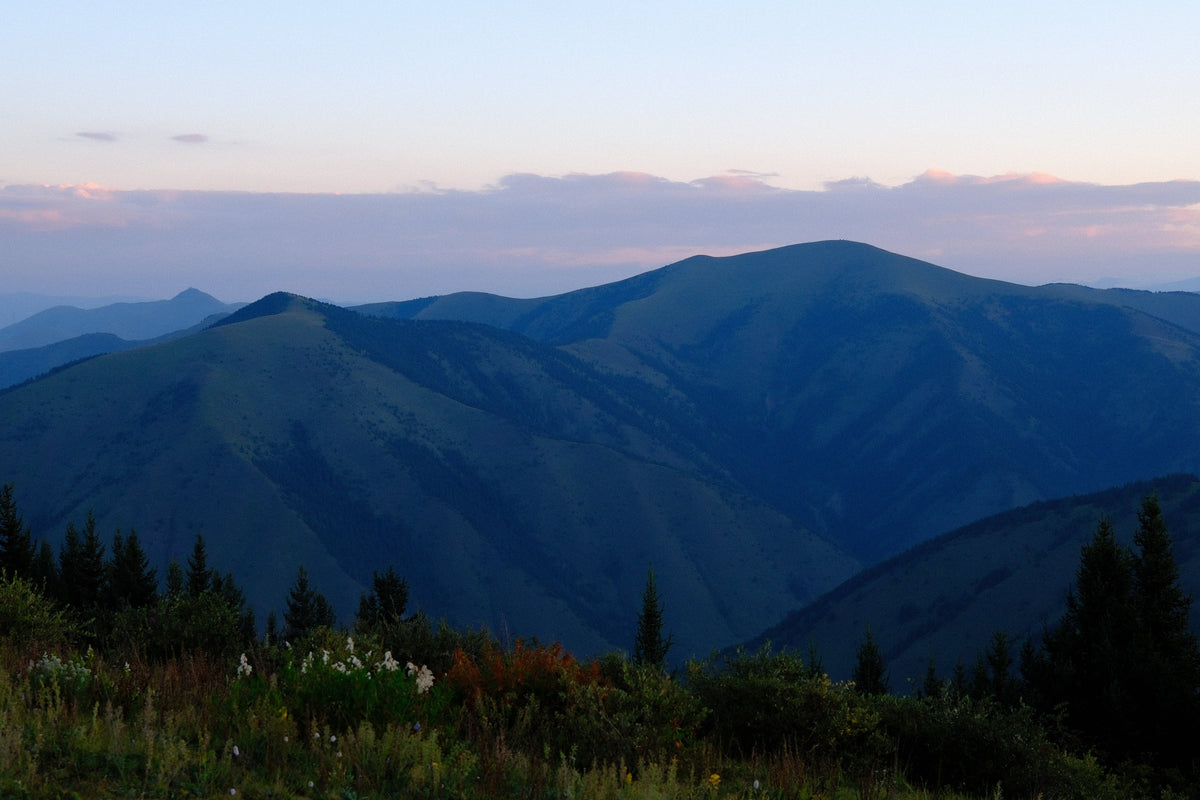
With plenty of stops along the way, we reached the pass just before sunset. We quickly pitched our tents and put our gear away before settling down to watch. We were lucky: the clouds were not hiding the mountain, leaving Gongga fully visible. As the setting sun caught the snow, the peak gradually turned gold. We stayed beside our tents for a long time, watching the last light leave the mountain.


It happened to be a full moon that night. After dark, the moon lit up the landscape like a huge lamp, and Gongga’s outline remained clearly visible. We watched clouds move quickly around the mountain, with lightning flashing inside them, until they reached the mountainside and gradually dispersed. Seeing the moonlit peak surrounded by shifting storm clouds was something we had rarely experienced. It was easy to understand the sense of reverence a mountain like this inspires.

Only after watching the mountain did we get around to dinner: a simple meal of dehydrated rice and miso soup. After a day of walking, hot food and a bowl of soup were more than enough. We cleaned up, climbed into our sleeping bags early, and soon fell asleep.
Around midnight, the sound of an animal moving outside the tents woke us. We immediately became tense. We had heard that the area was home to plenty of wildlife, possibly including wolves and Tibetan brown bears—a large subspecies of brown bear found on the Tibetan Plateau. With that in mind, nobody said a word. We just listened. After a while, we guessed it was probably a yak and relaxed a little. Yaks are well adapted to the cold, high-altitude environment and are commonly kept by local herders. But we never saw the animal clearly, so we could not be sure what it was or whether it belonged to a nearby herd.
The next morning, we caught the sunrise, but the weather soon began to change. Clouds gathered and gradually hid the mountain. With rain in the forecast, we packed up our tents and headed down without lingering, bringing our two-day trip to an end. It had been a short stay, but seeing Gongga in the golden evening light, under a full moon, and again at sunrise made it well worth the walk.
